Closing Statement of a Workshop on "The Impact of Current Economic Conditions on Child Labor in the Arab Countries"
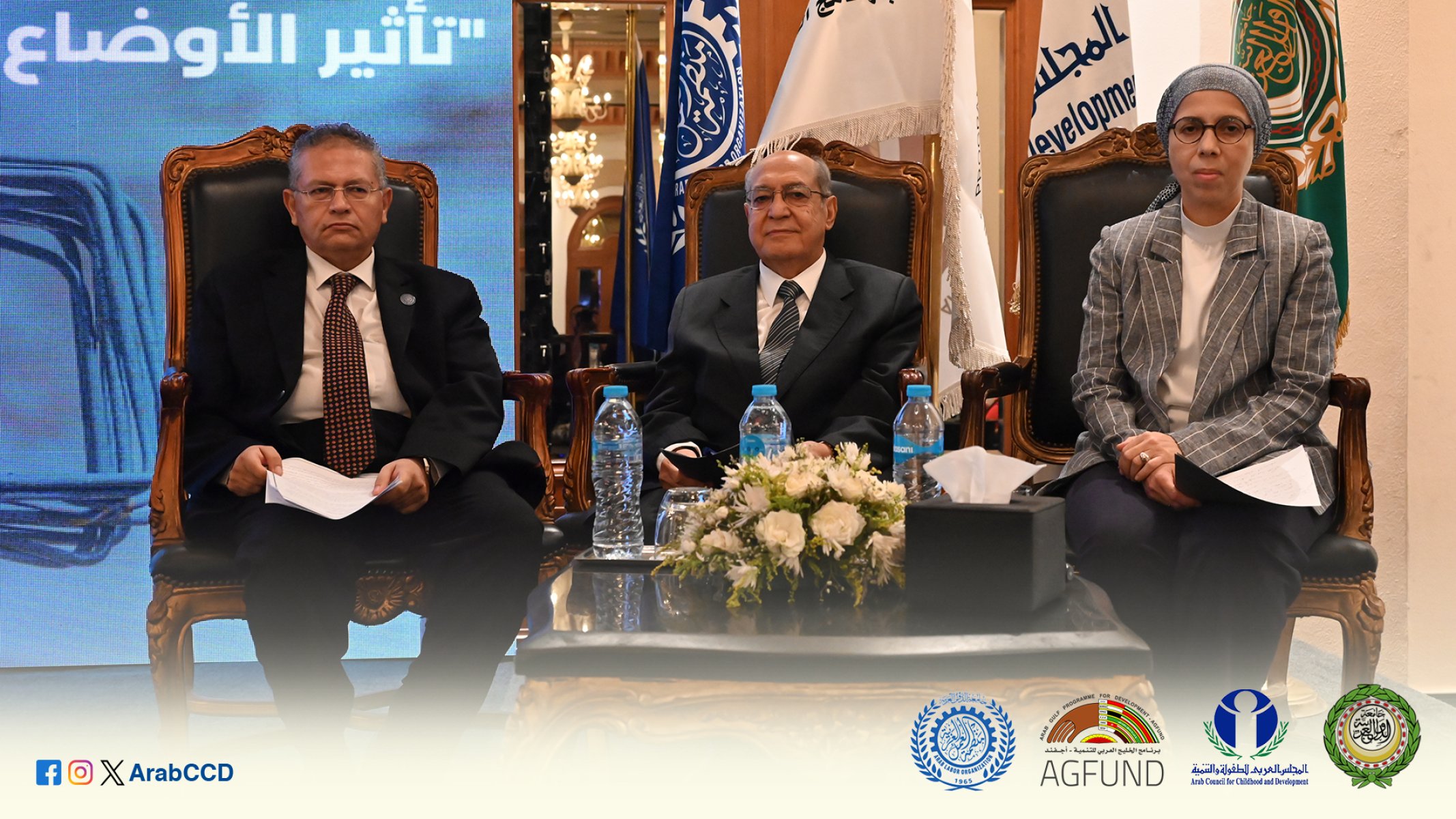
The League of Arab States (LAS), the Arab Labor Organization (ALO), the Arab Gulf Programme for Development (AGFUND), and the Arab Council for Childhood and Development (ACCD) collaboratively organized a Workshop titled "The Impact of Current Economic Conditions on Child Labor in the Arab Countries". The Workshop was held in Cairo from July 9-10, 2024, and gathered nearly 90 participants from 13 countries. Attendees included representatives from national childhood mechanisms, production entities, relevant international, regional, and national childhood institutions, experts, and media professionals.
The Workshop's proceedings commenced with the following opening speeches: the speech of HRH Prince Abdulaziz bin Talal bin Abdulaziz Al Saud, President of ACCD and AGFUND, delivered on his behalf by Professor Hassan Al-Bilawi, Secretary General of ACCD; the speech of Ambassador Dr. Haifa Abu Ghazaleh, Assistant Secretary General and Head of the Social Affairs Sector at LAS, delivered on her behalf by Minister Plenipotentiary Lubna Azzam, Director of the Family and Childhood Department at LAS; and the speech of Mr. Fayez Ali Al-Mutairi, Director General of ALO, delivered on his behalf by Counselor Islam Sanaa, Supervisor of Social Protection at ALO. In addition, Dr. Nasser Alkahtani, Executive Director of AGFUND, presented a keynote speech titled "Sustainable Approaches to Combating Child Labor".
The world, and particularly the Arab region, has faced numerous challenges and crises. In recent years, the Arab region has become the largest area for refugees and displaced persons due to escalating conflicts. This includes the inhumane violations and crimes committed by the Zionist occupation forces in the Gaza Strip and the State of Palestine, such as killing, extermination, starvation, blatant assaults on children, women, and the elderly, and the destruction of all life components. Additionally, the region has been impacted by the repercussions of the COVID-19 pandemic and the increasing effects of climate shocks, with studies confirming it as one of the most affected areas by these changes. The economic crisis further threatens significant social, health, and educational challenges, negatively impacting development and poverty eradication efforts. Children are the most vulnerable group affected by these crises and disasters, especially those living in difficult conditions.
Millions of children will be forced into illicit labor markets without any protective framework, which threatens their development and future.
The Arab Workshop aimed to understand the real impact of the global economic crisis on the scale and patterns of child labor in the Arab countries and its repercussions. It also sought to highlight the severity of child labor as a clear violation of children's rights, continuing the partners' efforts in developing and protecting the rights of Arab children, including working children, and implementing the recommendations of the Arab Childhood Committee.
The Workshop included four working sessions. These sessions discussed several key areas, such as the relationship between child labor and multi-dimensional poverty, child labor and Sustainable Development Goals, and the legal and human rights protection of child laborers during economic crises. Additionally, participants explored best Arab practices in confronting child labor in Arab countries amidst the current economic challenges.
Participants commended the joint efforts of the organizing bodies since their collaboration on a Child Labor Study in 2019. They urged further cooperation to combat child labor, especially its worst forms, and advocated for safeguarding children's rights to ensure a safer, more peaceful, and sustainable future.
Key Recommendations:
- Data Collection and Monitoring: Develop periodic data collection systems, create databases and surveys on child labor according to international standards, and establish national observatories to monitor hazardous child labor cases for rapid intervention.
- Sustainable Policies and Social Protection: Implement and develop sustainable growth policies and integrated social protection systems targeting vulnerable groups, especially children, with child-responsive budgets.
- Basic Services and Intervention Programs: Provide and improve the quality of essential services and intervention programs for poor and vulnerable families, including those of working children, such as social safety nets, cash and in-kind assistance, and financial inclusion programs, particularly during crises.
- Integration of Child Labor Measures: Integrate child labor prevention measures into national poverty reduction and development efforts, especially within health, education, labor, and social protection policies, providing qualified human resources for monitoring and inspection at labor ministries.
- Educational Policies: Develop educational policies, address school dropouts, and create suitable policies to eradicate illiteracy in Arab countries, recognizing it as a primary driver of child labor.
- Legislation Review and Activation: Activate and review national legislation in line with international and regional conventions and sustainable development goals and amend child laws to penalize anyone who prevents or deprives a child of education.
- Decent Work for Adults: Promote decent work for adults as a fundamental approach to eradicating poverty and unemployment, with positive repercussions for reducing child labor.
- Civil Society Engagement: Enhance the integration of civil society organizations in addressing child labor, enabling them to play their roles in reducing its prevalence, especially its worst forms.
- International and Regional Cooperation: Strengthen international and regional cooperation for experience and resource exchange and partnership building to eliminate child labor and protect children from violence and exploitation.
- Protection in Crises: Call on the international community and humanitarian organizations to protect children from the impact of crises, armed conflicts, and wars, providing necessary support for refugees and displaced persons in host countries to curb the steady increase in children engaged in hazardous labor.
- Community Awareness: Increase community awareness about the societal harms of child labor, using media to shape public opinion, and encourage advocacy campaigns to foster a societal culture around children and their rights, while working to address the root causes pushing children into the labor market.
- Strategy Update: Call on organizations involved in the workshop to update the Arab Strategy for Combating Child Labor to align with current challenges, crises, and changes.
- Technological Exploitation: Urge states to take necessary measures to combat technological child labor and the exploitation of children via digital platforms.
Date: July 10, 2024